Overview
Asurion stores build long-term relationships with local businesses through a B2B repair model. These clients often drop off multiple devices at once, receive negotiated pricing or flat-rate discounts, and are billed periodically instead of paying at pickup.
However, the existing Legacy Portal was built for consumer repairs, not business accounts. As B2B relationships grew in complexity and revenue, the operational friction increased.
The problem
The B2B workflow relied heavily on manual processes and workarounds:
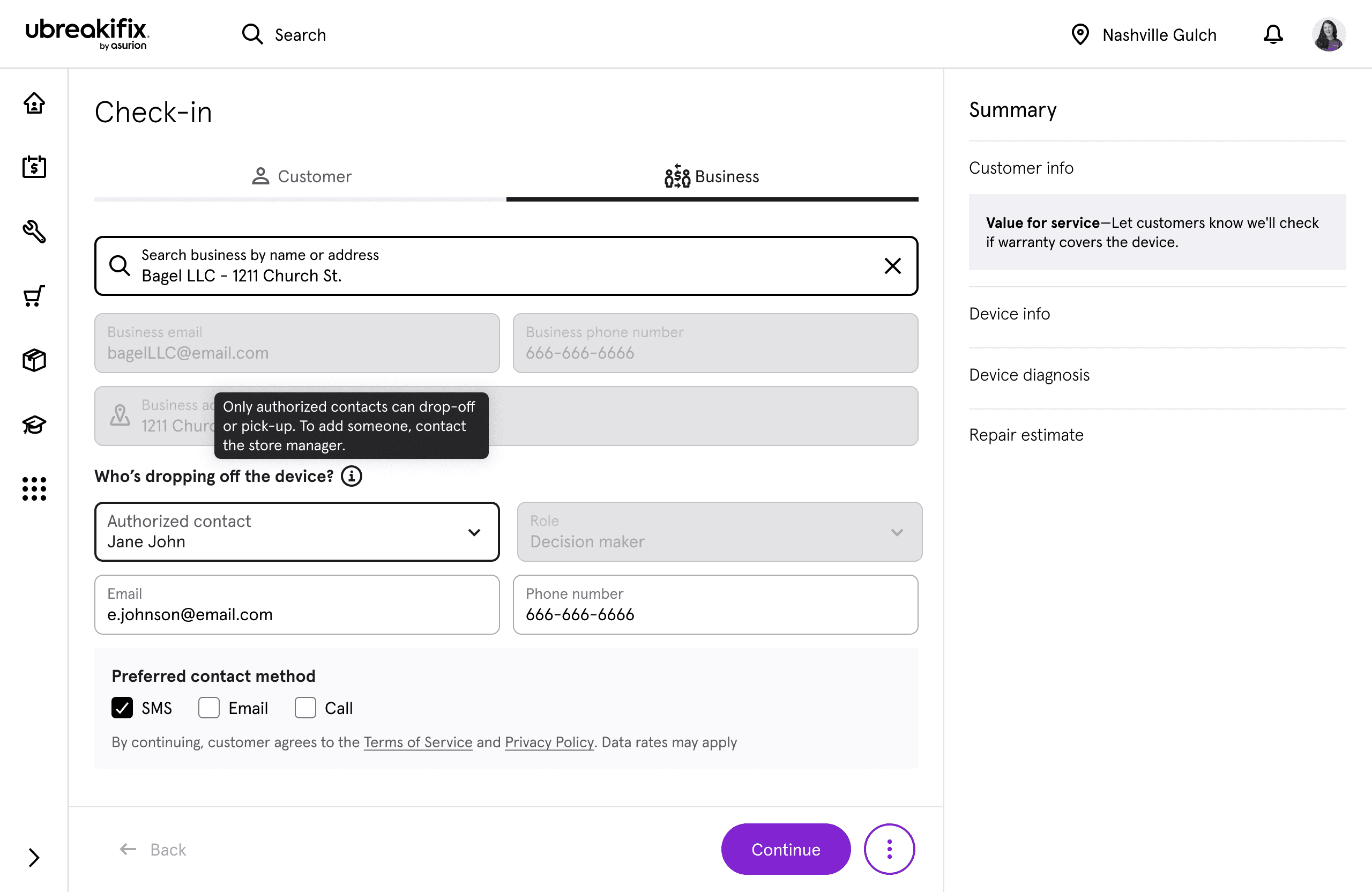
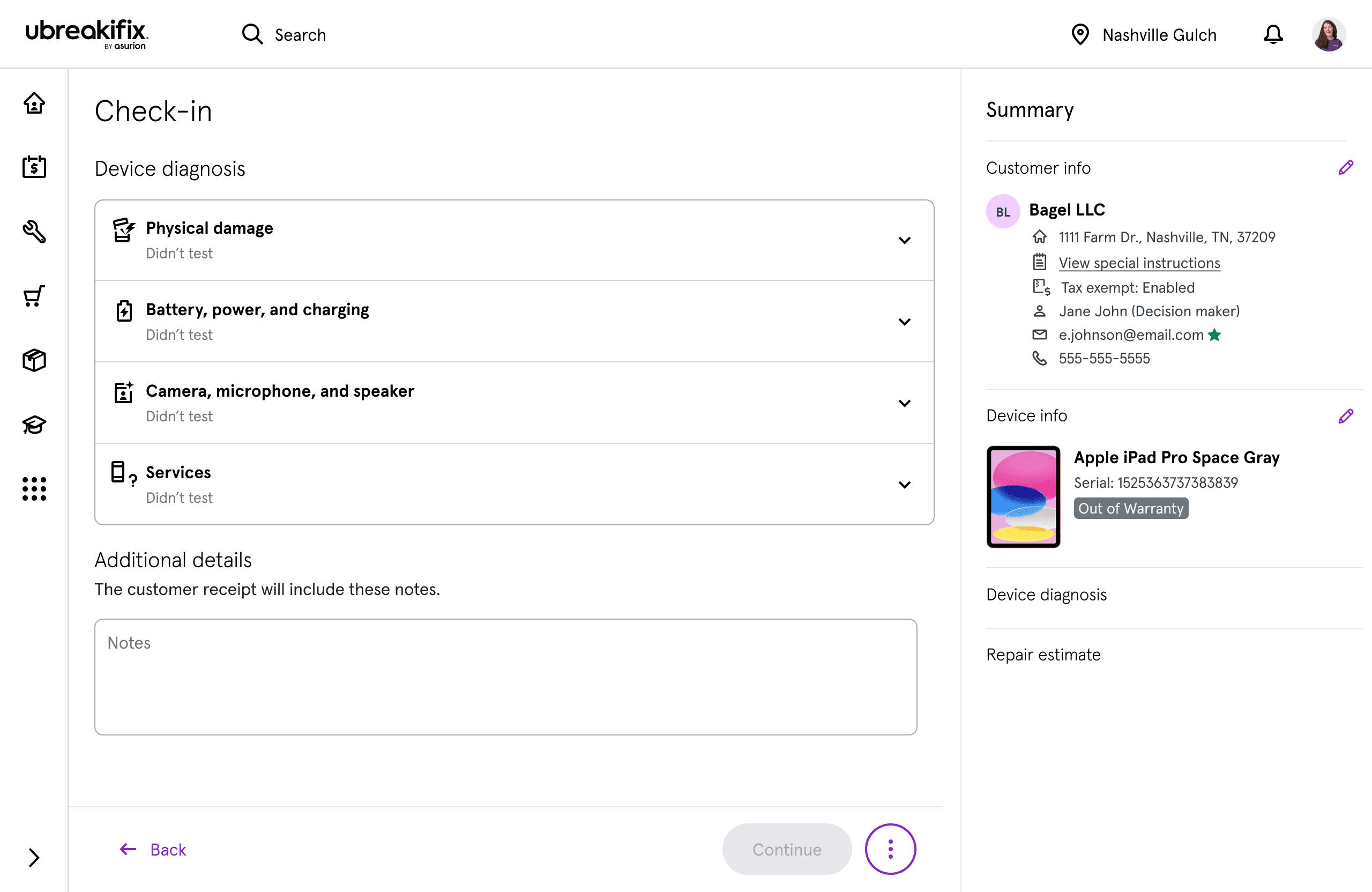
Inconsistent device check-ins
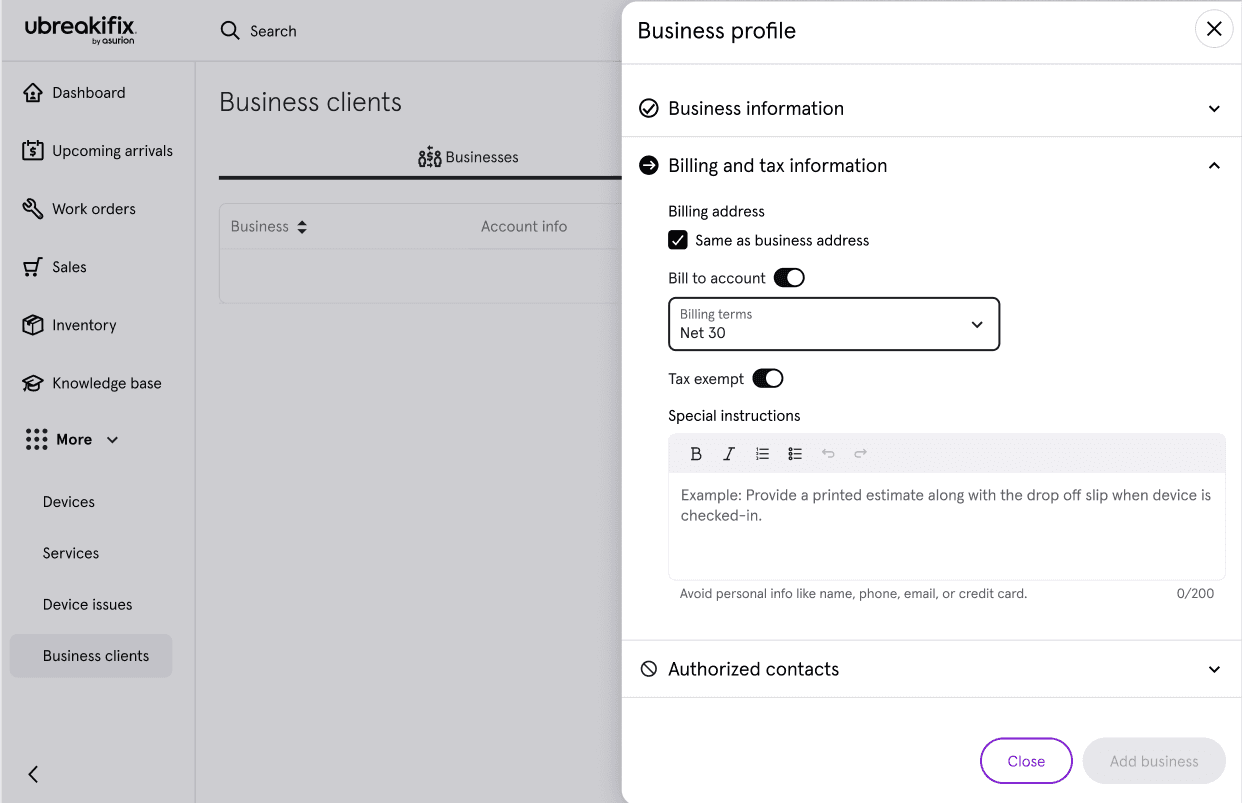
Difficulty to set tax exemption and billing terms
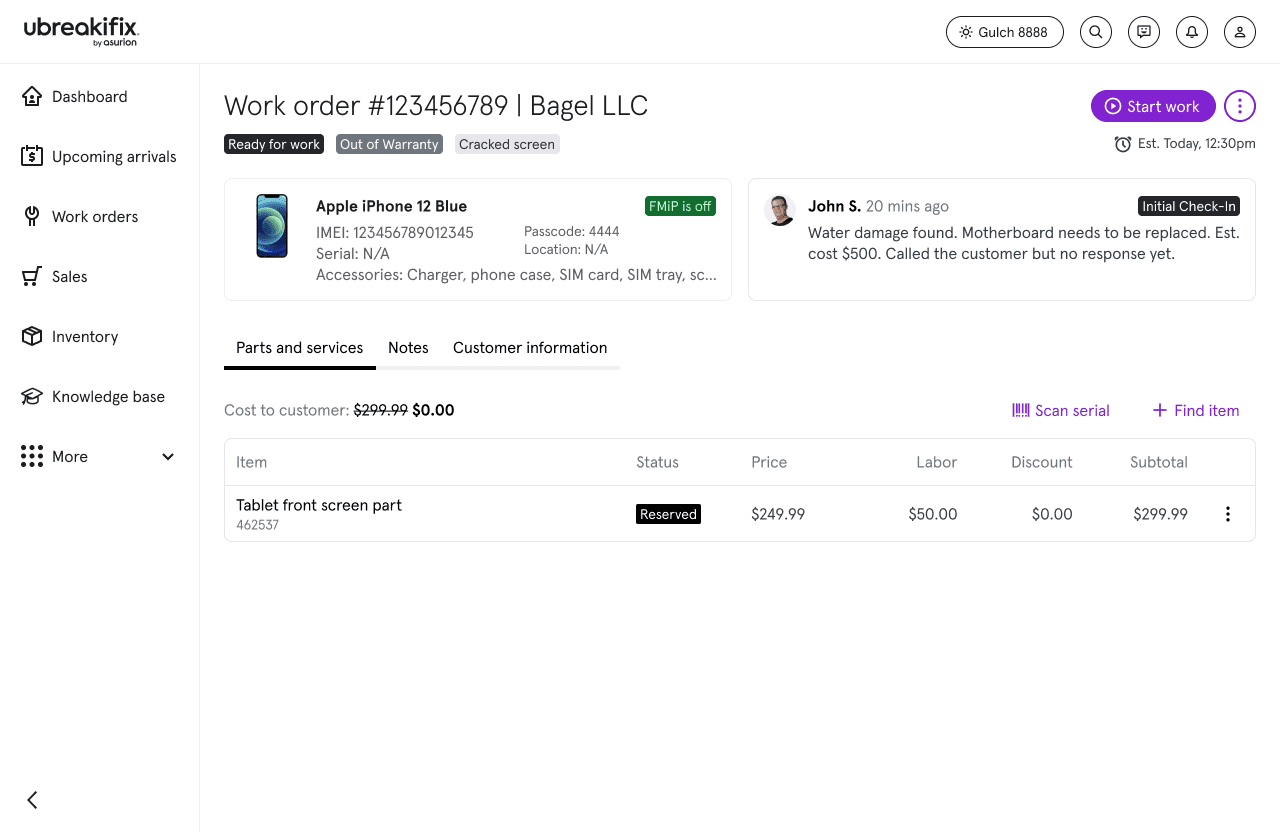
Discounts tracked in notes or spreadsheets
Pricing errors due to manual overrides
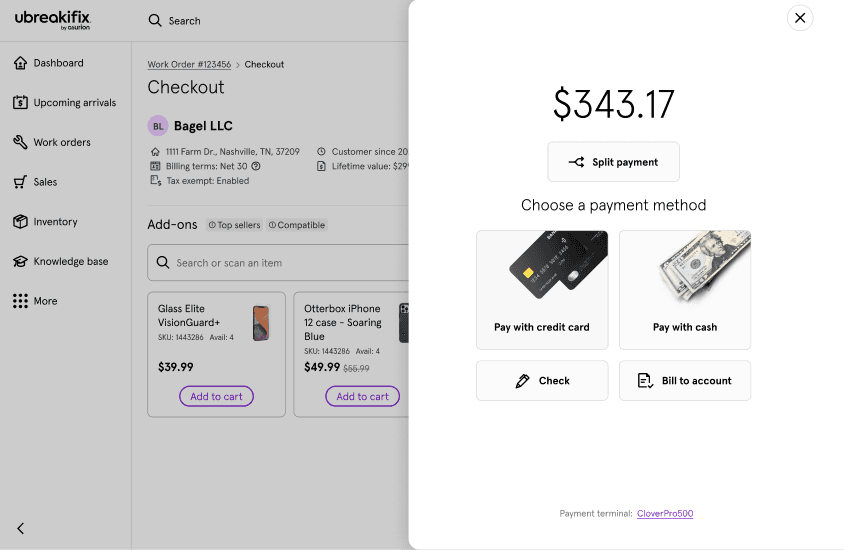
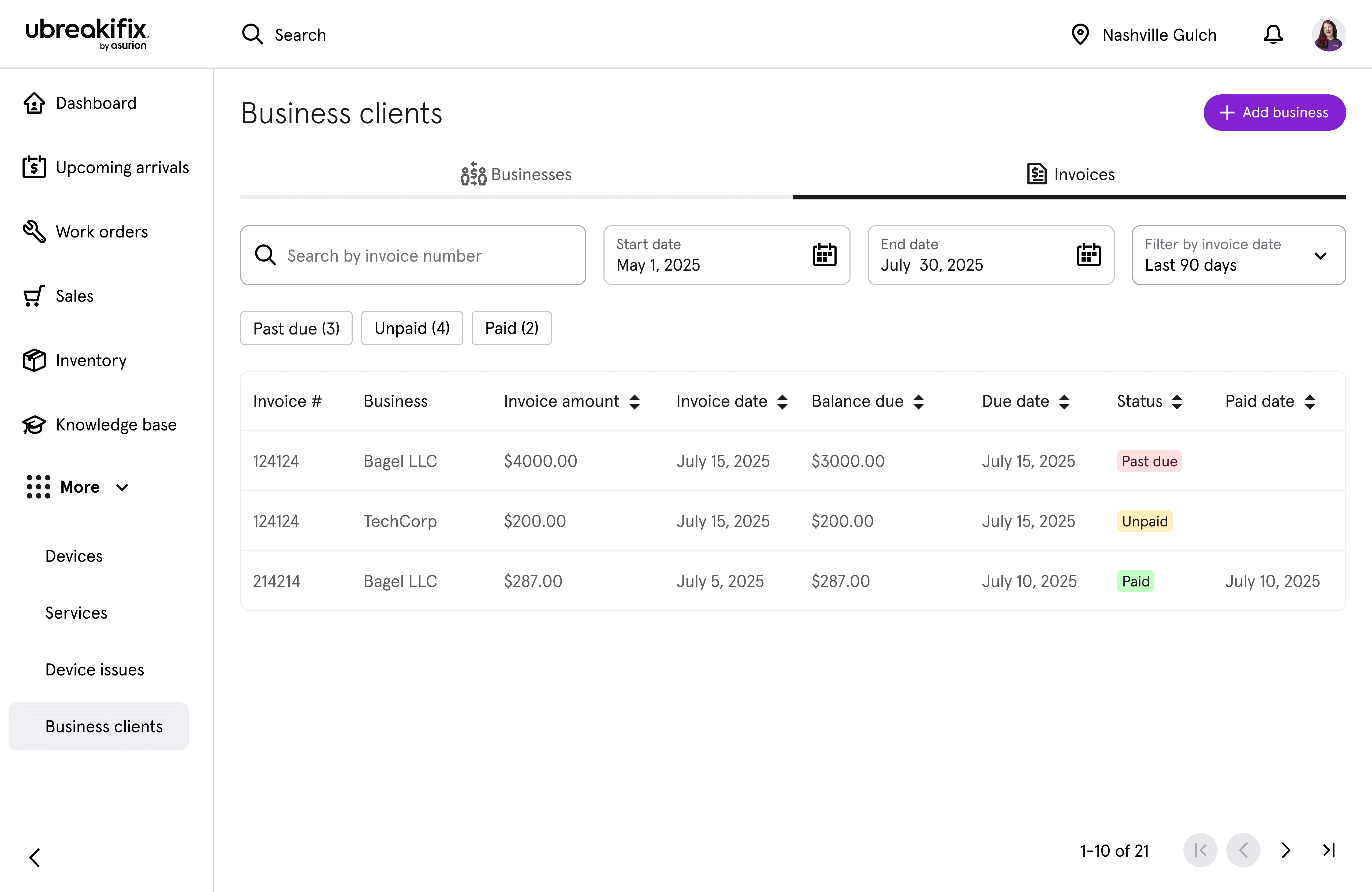
Trade credit and invoicing lacked transparency
Devices occasionally misplaced due to intake inconsistencies
The system technically functioned, but it wasn’t designed for how business relationships actually operate, which created risk to revenue, brand trust, and scalability.
My role
I led the end-to-end B2B initiative
My responsibilities included:
Conducting discovery research and facilitating store owner interviews
Leveraged AI to prototype ideas quickly and align stakeholders early.
Requirement sessions with Product and Engineering
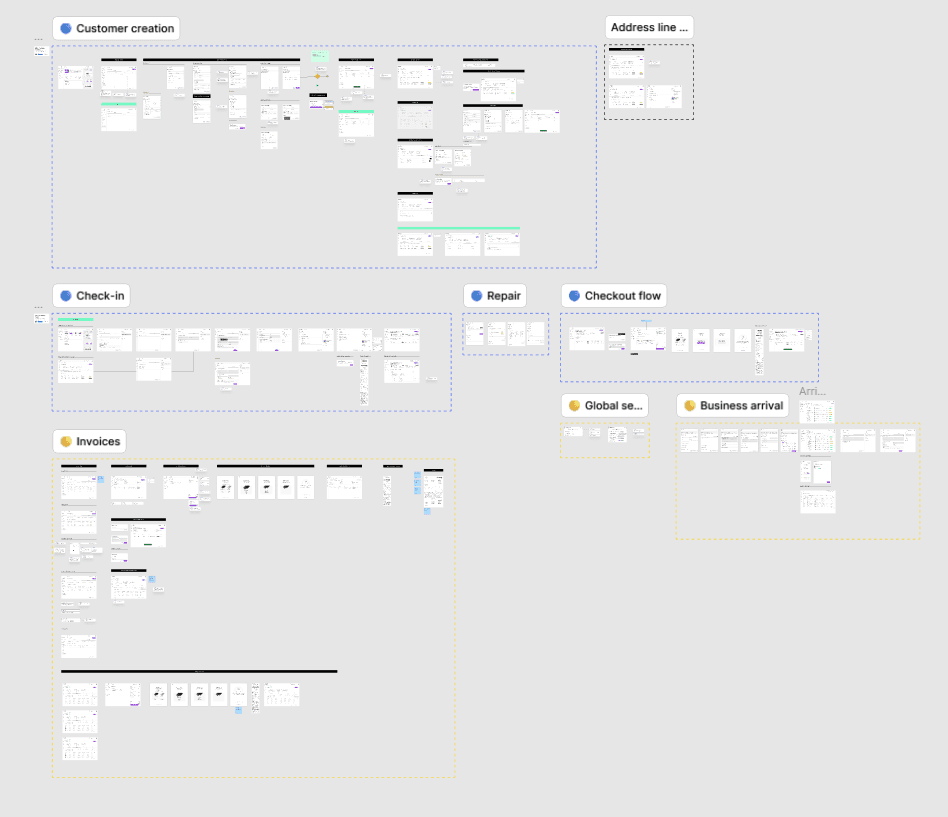
Translating insights into scalable workflows and system logic
Designing business creation, pricing, and invoicing experiences
Presenting work in cross-functional design reviews
Partnering with engineering through implementation and QA
Results
Replaced spreadsheet and note-based discount tracking with dynamic pricing
Standardized business account creation for all new B2B clients
Reduced pricing ambiguity and override dependency
Improved intake accuracy for device drop-offs
50+
100%
100%